Zirconium rod certification standards are crucial for ensuring the quality, safety, and performance of these versatile materials in various industries. These standards encompass a range of specifications, including chemical composition, mechanical properties, and dimensional tolerances. Organizations such as ASTM International and ISO provide comprehensive guidelines for zirconium rod certification, covering everything from raw material sourcing to final product testing. Understanding these standards is essential for manufacturers, suppliers, and end-users to guarantee that zirconium rods meet the rigorous requirements of nuclear, chemical, aerospace, and medical applications.
Key Certification Standards for Zirconium Rods
ASTM Standards for Zirconium and Zirconium Alloy Rods
ASTM International has developed several standards specifically for zirconium and its alloys. ASTM B550 is the primary standard for zirconium and zirconium alloy ingots and wrought products, including rods. This standard outlines the chemical composition, mechanical properties, and testing methods required for various grades of zirconium rods. Additionally, ASTM B351 covers the manufacturing and quality control processes for hot-rolled and cold-finished zirconium and zirconium alloy bars, rods, and wire for nuclear applications.
ISO Standards for Zirconium Materials
The International Organization for Standardization (ISO) provides global standards for zirconium materials. ISO 9001 certification ensures that manufacturers follow quality management systems in their production processes. For zirconium rods specifically, ISO 9453 outlines the requirements for zirconium and zirconium alloys in ingot form, which serves as the raw material for rod production. These standards help maintain consistency and quality across international markets.
Nuclear Industry-Specific Certifications
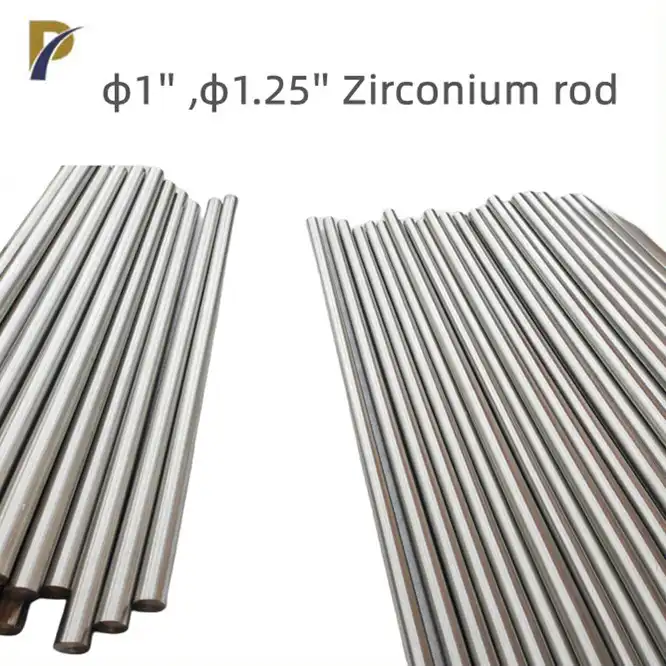
Given zirconium's critical role in nuclear applications, additional certifications are often required. The American Society of Mechanical Engineers (ASME) Boiler and Pressure Vessel Code Section III provides standards for nuclear facility components, including those made from zirconium rods. Manufacturers must adhere to these stringent requirements to ensure the safety and reliability of nuclear reactor components.
 |
 |
Certification Process and Testing Procedures
Chemical Composition Analysis
A critical step in the certification of zirconium rods is the verification of their chemical composition to ensure compliance with specified alloy grades. Advanced analytical techniques such as X-ray fluorescence (XRF) spectroscopy and inductively coupled plasma mass spectrometry (ICP-MS) are routinely employed for this purpose. These methods provide accurate data on the elemental makeup, detecting even trace impurities that could affect performance. By confirming conformity to standards, such as those governing nuclear-grade alloys like Zircaloy-4 or Zr-2.5Nb, manufacturers guarantee material consistency and suitability for demanding industrial and nuclear applications.
Mechanical Property Testing
Mechanical property testing forms another essential component of zirconium rod certification. Standardized tensile tests are conducted to determine yield strength, ultimate tensile strength, and elongation, ensuring the rods can endure mechanical stresses. Hardness evaluations, including Vickers and Rockwell testing, assess the resistance of the material to localized deformation. For applications where rods are exposed to dynamic forces, additional tests such as impact resistance and fatigue life evaluations may be performed. These procedures verify that zirconium rods deliver reliable performance in environments requiring high strength, durability, and resistance to cyclic stress conditions.
Dimensional and Surface Inspection
Dimensional accuracy and surface integrity are crucial quality parameters in zirconium rod certification. Precision measuring tools are used to assess rod diameter, length, roundness, and straightness, guaranteeing compliance with design specifications. Surface inspections include both visual examinations for scratches, dents, or oxidation, as well as advanced techniques like eddy current testing to detect micro-defects not visible to the naked eye. Ensuring uniform surface quality and dimensional control helps prevent performance issues during application, while also enhancing the reliability, safety, and longevity of zirconium rods in critical industries.
Importance of Certification for End-Users
Quality Assurance and Reliability
For end-users in highly regulated industries such as aerospace, medical, and nuclear power, certified zirconium rods provide a strong guarantee of consistent quality and long-term reliability. Certification documents include detailed records of the material’s mechanical properties, chemical composition, and production history, giving users confidence in their suitability for specific applications. This traceability ensures that every batch of zirconium rods meets predefined standards. In industries where safety and efficiency are paramount, such documentation is critical for reducing risks and ensuring uninterrupted operational performance.
Regulatory Compliance
Strict regulatory requirements govern the selection of materials used in critical industries, making certification of zirconium rods essential. Certified rods provide documented proof that they meet international standards and regulatory guidelines, simplifying compliance audits and approvals. In the medical sector, for instance, using certified materials helps support FDA or CE approval by offering evidence of quality and consistency. Similarly, in nuclear power, certification demonstrates adherence to safety protocols. By relying on certified zirconium rods, manufacturers and end-users reduce liability and ensure products comply with legal and industry-specific regulations.
Performance Optimization
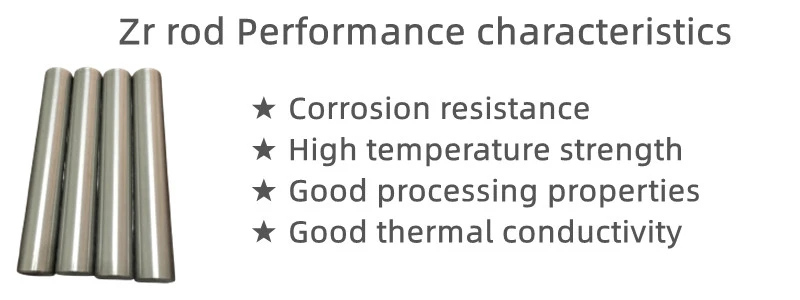
Certification plays a key role in ensuring zirconium rods meet the performance standards necessary for demanding industrial applications. Engineers and designers can confidently choose certified rods knowing they have been tested for properties such as corrosion resistance, mechanical strength, and neutron absorption efficiency. This assurance allows for precise material selection that optimizes performance in critical environments—whether in chemical reactors, medical implants, or nuclear fuel cladding. Certified zirconium rods not only meet expected technical requirements but also provide reliability that supports innovation, efficiency, and long-term operational success.
Conclusion
Understanding zirconium rod certification standards is essential for ensuring the quality, safety, and performance of these critical materials. From ASTM and ISO standards to industry-specific requirements, these certifications provide a framework for consistent production and reliable performance. For manufacturers, suppliers, and end-users alike, adherence to these standards is crucial for maintaining the integrity of products and processes across various high-tech industries.
FAQs
What is the most common certification standard for zirconium rods?
ASTM B550 is widely recognized as the primary standard for zirconium and zirconium alloy rods.
How often should zirconium rods be recertified?
Typically, certification is done per batch or lot. Recertification may be required if the material has been stored for extended periods or if there are concerns about its condition.
Can zirconium rods be certified for multiple industries?
Yes, depending on their properties, zirconium rods can be certified to meet standards for various industries, including nuclear, aerospace, and medical.
Choose Shaanxi Peakrise Metal Co., Ltd. for Certified Zirconium Rods
As a leading zirconium rod manufacturer and supplier, Shaanxi Peakrise Metal Co., Ltd. offers fully certified products that meet international standards. Our state-of-the-art production facilities and rigorous quality control ensure that every zirconium rod meets or exceeds industry certifications. With our expertise in non-ferrous metals and commitment to customer satisfaction, we are your trusted partner for high-quality zirconium rods. Contact us at info@peakrisemetal.com to learn more about our certified products and how we can meet your specific requirements.
References
ASTM International. "ASTM B550 - Standard Specification for Zirconium and Zirconium Alloy Ingots for Nuclear Application."
International Organization for Standardization. "ISO 9453:2014 - Soft solder alloys — Chemical compositions and forms."
American Society of Mechanical Engineers. "ASME Boiler and Pressure Vessel Code, Section III: Rules for Construction of Nuclear Facility Components."
World Nuclear Association. "Zirconium Alloys in Nuclear Technology."
ASM International. "Handbook of Zirconium and Hafnium."
Journal of Nuclear Materials. "Recent advances in zirconium alloys for nuclear applications."