Innovative Drawing Techniques for Enhanced Molybdenum Wire Properties
Ultra-fine Wire Drawing Processes
The pursuit of miniaturization in various industries has led to the development of ultra-fine molybdenum wire drawing techniques. These advanced processes allow for the production of wires with diameters as small as a few micrometers, opening up new possibilities in microelectronics and medical devices. By utilizing specialized die designs and carefully controlled drawing parameters, manufacturers can now achieve unprecedented levels of precision and consistency in ultra-fine molybdenum wire production.
Multi-pass Drawing Systems
Multi-pass drawing systems have emerged as a game-changer in molybdenum wire drawing production. These sophisticated setups enable manufacturers to perform multiple drawing operations in a single, continuous process, significantly improving efficiency and reducing production time. By optimizing the sequence of drawing stages and incorporating intermediate heat treatments, multi-pass systems can produce molybdenum wire with superior mechanical properties and dimensional accuracy.
Cryogenic Drawing Techniques
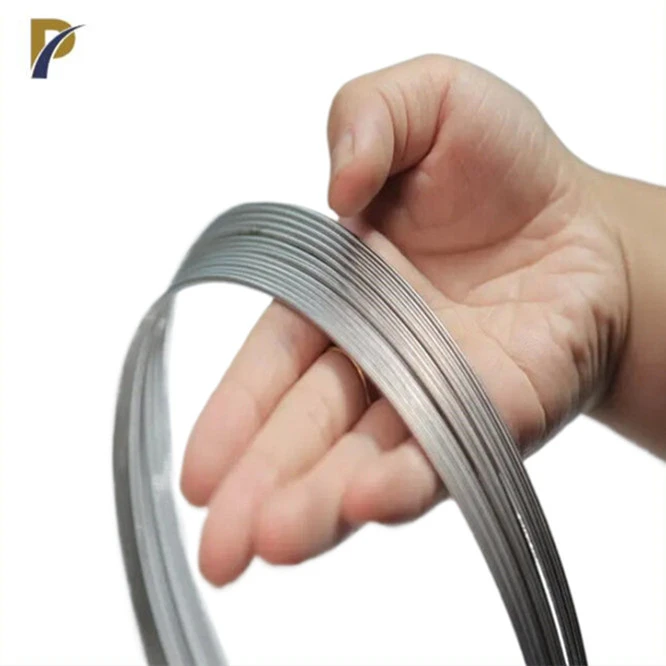
Cryogenic drawing represents a breakthrough in molybdenum wire drawing fabrication. This innovative technique involves drawing the wire at extremely low temperatures, typically using liquid nitrogen or helium as a cooling medium. The cryogenic environment alters the material's deformation behavior, resulting in enhanced strength, ductility, and microstructural stability. Cryogenically drawn molybdenum wire exhibits exceptional performance in high-stress applications, making it ideal for use in aerospace and nuclear industries.
 |
 |
Advanced Surface Treatments for Improved Molybdenum Wire Performance
Plasma-enhanced Chemical Vapor Deposition (PECVD) Coatings
PECVD coatings have revolutionized the surface properties of molybdenum wire. This advanced technique allows for the deposition of ultra-thin, uniform layers of various materials onto the wire surface. By applying coatings such as diamond-like carbon or titanium nitride, manufacturers can significantly enhance the wire's wear resistance, electrical conductivity, and corrosion resistance. These coatings also enable molybdenum wire to be used in previously challenging environments, expanding its range of applications.
Nanostructured Surface Modifications
Nanostructured surface modifications represent a cutting-edge approach to enhancing molybdenum wire drawing properties. By creating nanoscale patterns or textures on the wire surface, manufacturers can manipulate its physical and chemical characteristics at the atomic level. These modifications can lead to improved adhesion, reduced friction, and enhanced biocompatibility, making nanostructured molybdenum wire particularly valuable in medical implants and advanced sensing devices.
Electrochemical Surface Treatments
Electrochemical surface treatments have emerged as a powerful tool for tailoring the properties of molybdenum wire. These processes involve subjecting the wire to controlled electrochemical reactions, resulting in surface modifications that can enhance corrosion resistance, improve electrical conductivity, or create unique surface textures. By fine-tuning the electrochemical parameters, manufacturers can achieve precise control over the wire's surface properties, enabling customization for specific applications.
 |
 |
Precision Control Systems for Optimized Molybdenum Wire Drawing
Real-time Monitoring and Feedback Systems
The integration of real-time monitoring and feedback systems has significantly improved the consistency and quality of molybdenum wire production. Advanced sensors and data analytics tools continuously monitor critical parameters such as wire tension, temperature, and dimensional accuracy throughout the drawing process. This real-time data enables immediate adjustments to be made, ensuring optimal drawing conditions and minimizing defects. The result is molybdenum wire with superior uniformity and reliability, meeting the exacting standards of high-tech industries.
Artificial Intelligence-driven Process Optimization
Artificial Intelligence (AI) has made its way into molybdenum wire drawing technology, revolutionizing process optimization. AI algorithms analyze vast amounts of historical and real-time data to identify patterns and correlations that human operators might miss. By leveraging machine learning techniques, these systems can predict potential issues before they occur and suggest optimal process parameters for different wire specifications. This AI-driven approach not only improves product quality but also enhances overall production efficiency and reduces waste.
Adaptive Die Design and Control
Adaptive die design and control systems represent a significant leap forward in molybdenum wire drawing technology. These innovative systems utilize advanced materials and smart actuators to dynamically adjust the die geometry during the drawing process. By continuously optimizing the die profile based on real-time feedback, manufacturers can achieve unprecedented levels of dimensional accuracy and surface finish. Adaptive dies also extend tool life and enable the production of complex wire profiles that were previously challenging to achieve.
Conclusion
The latest advances in molybdenum wire drawing technology have ushered in a new era of possibilities for this versatile material. From innovative drawing techniques that push the boundaries of wire dimensions and properties to advanced surface treatments that enhance performance in extreme environments, these developments are driving progress across multiple industries. The integration of precision control systems and AI-driven optimization further ensures that molybdenum wire production meets the ever-increasing demands of modern applications.
As we look to the future, it's clear that molybdenum wire drawing technology will continue to evolve, driven by the relentless pursuit of improved performance and efficiency. These advancements not only benefit manufacturers but also enable the creation of more sophisticated and reliable products that impact our daily lives. The ongoing research and development in this field promise even more exciting innovations on the horizon, further solidifying molybdenum wire's position as a critical material in the technological landscape.
Contact Us
If you're interested in learning more about our cutting-edge molybdenum wire drawing technology and how it can benefit your projects, we'd love to hear from you. Contact us at info@peakrisemetal.com to discuss your specific requirements and discover how our expertise can help drive your innovations forward.